This is a classic udon soup recipe (かけうどん) showcasing the simplicity of Japanese cooking at its best. The udon noodles are served in a light and savory broth and topped with various toppings, filling enough to be served for lunch or dinner. And it only take 15 minutes to make from start to finish.
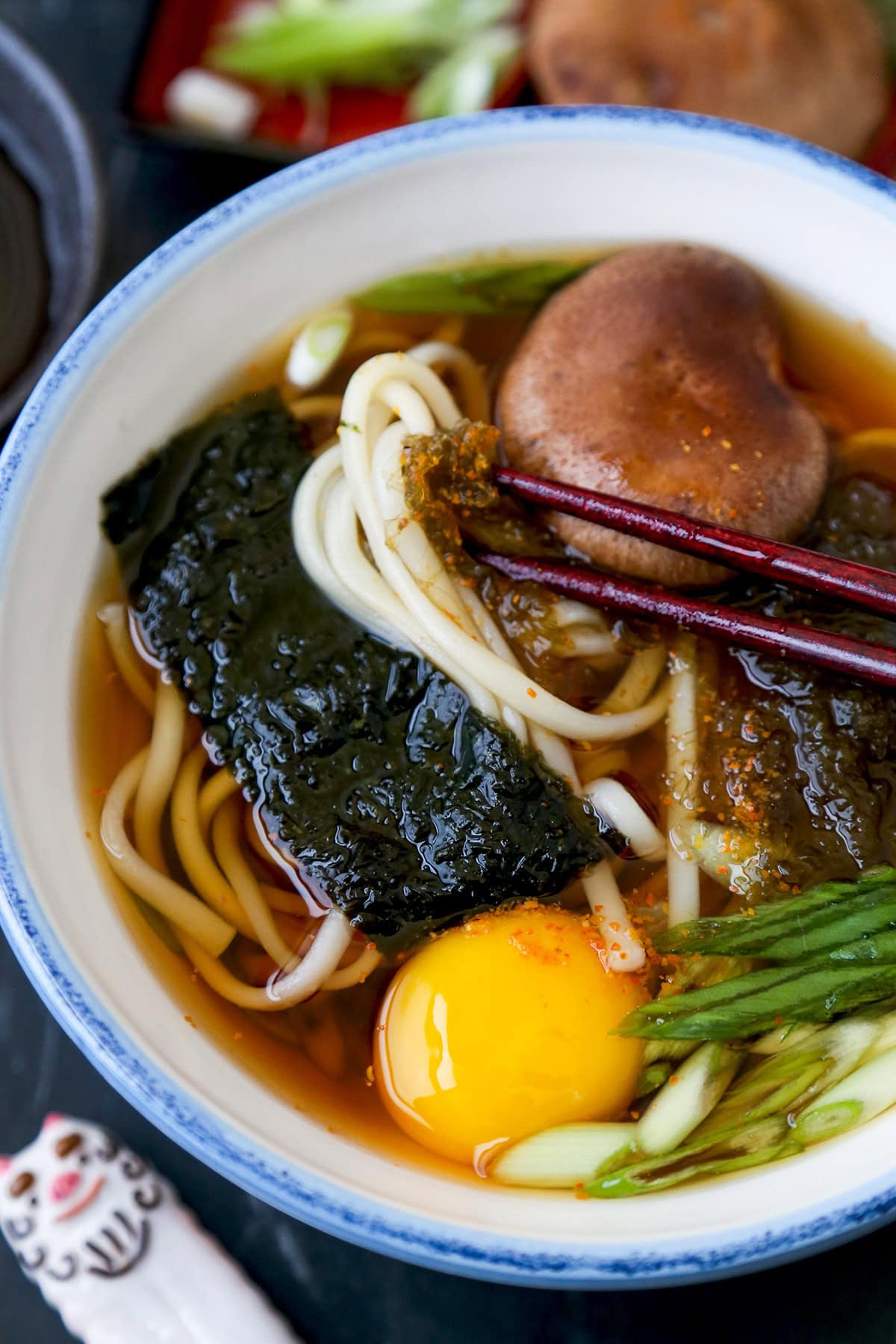
This light udon noodle soup is one of those meals I turn to when I want something warm, comforting, and nourishing without feeling heavy. It’s based on a classic Japanese style of soup often called kake udon — thick udon noodles served in a simple, clear broth made with dashi, soy sauce, and mirin.
This recipe is proof that you don’t need a long list of ingredients to make something deeply satisfying. With just a few pantry staples and fresh udon noodles, you can have a cozy bowl of soup on the table in about 15 minutes.
If you are new to Japanese food, check out this basic guide to 14 Essential Japanese Ingredients.
Why This Recipe Works
- Easy to make. There are only three steps to this recipe – make the broth, boil the noodles, and add the toppings.
- Affordable Japanese food. Making udon at home is very cheap compared to how much restaurants charge, and doesn’t taste that much different.
- Kid friendly. The savory, umami, and slightly sweet flavors of the broth, mixed with chewy udon noodles make this dish a favorite among kids in Japan.
Table of contents
Udon Soup Ingredients
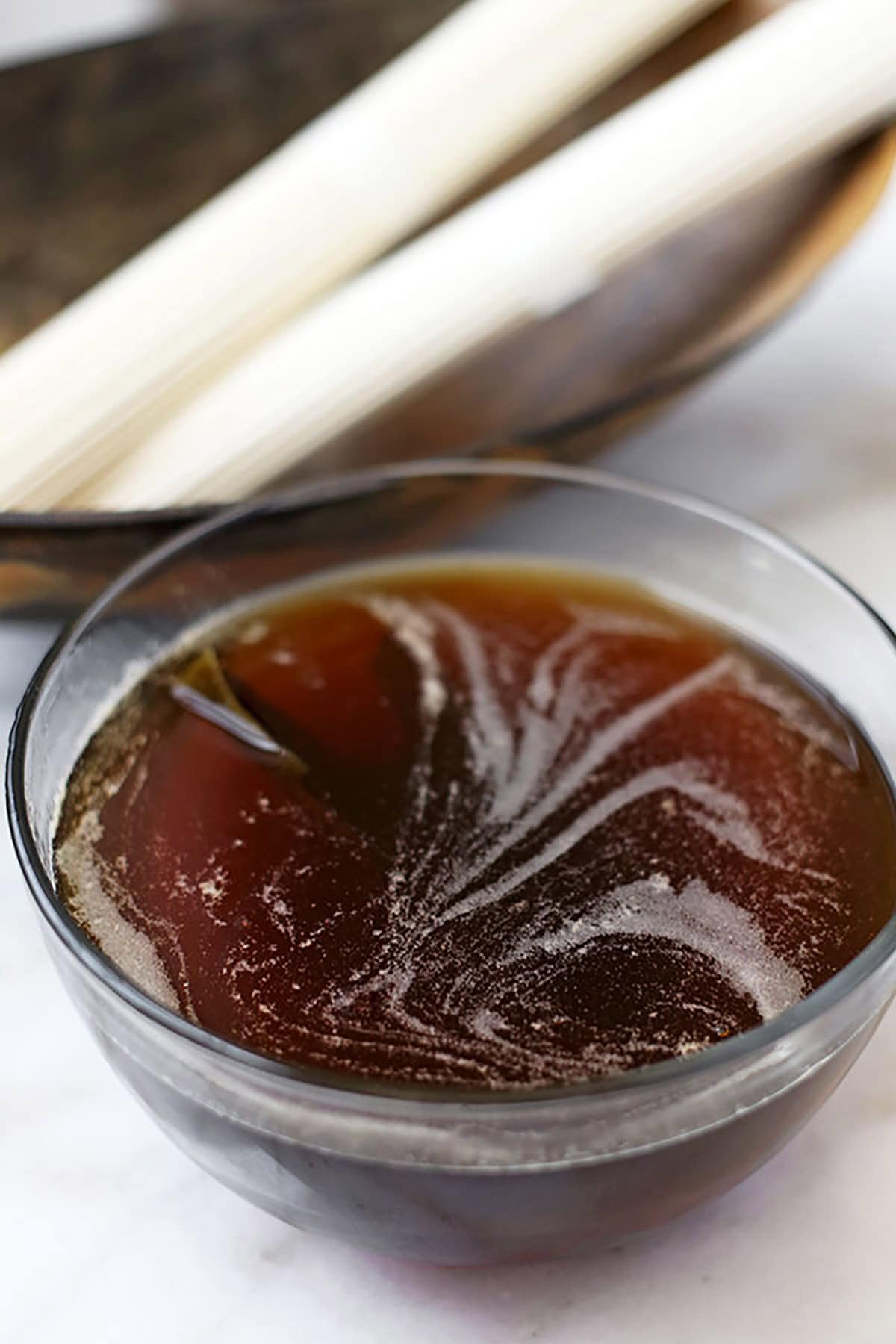
- Dashi: You can make dashi from scratch, which is very easy, or you can buy dashi powder. If you are using it in powder form, make sure to pick a good one such as the Kayanoya brand, which has been around in Japan for over 100 years.
- Water: Udon broth is much milder in taste than a traditional ramen broth, which is why it needs to be diluted with water.
- Soy Sauce: Soy sauce is for umami and to infuse savory and salty flavors.
- Mirin: Mirin is soy sauce’s best friend! Its sweet and sake-like flavors balance the umami and saltiness of soy sauce to perfection.
- Kombu: You don’t need to use kombu if you are making a vegan broth. Kombu adds a slight mineral taste to the broth that is reminiscent of the ocean.
- Udon noodles: Udon are thick Japanese noodles made of wheat flour known for their soft and chewy texture. There are different types of udon noodles available, scroll down to find out what the best type is.
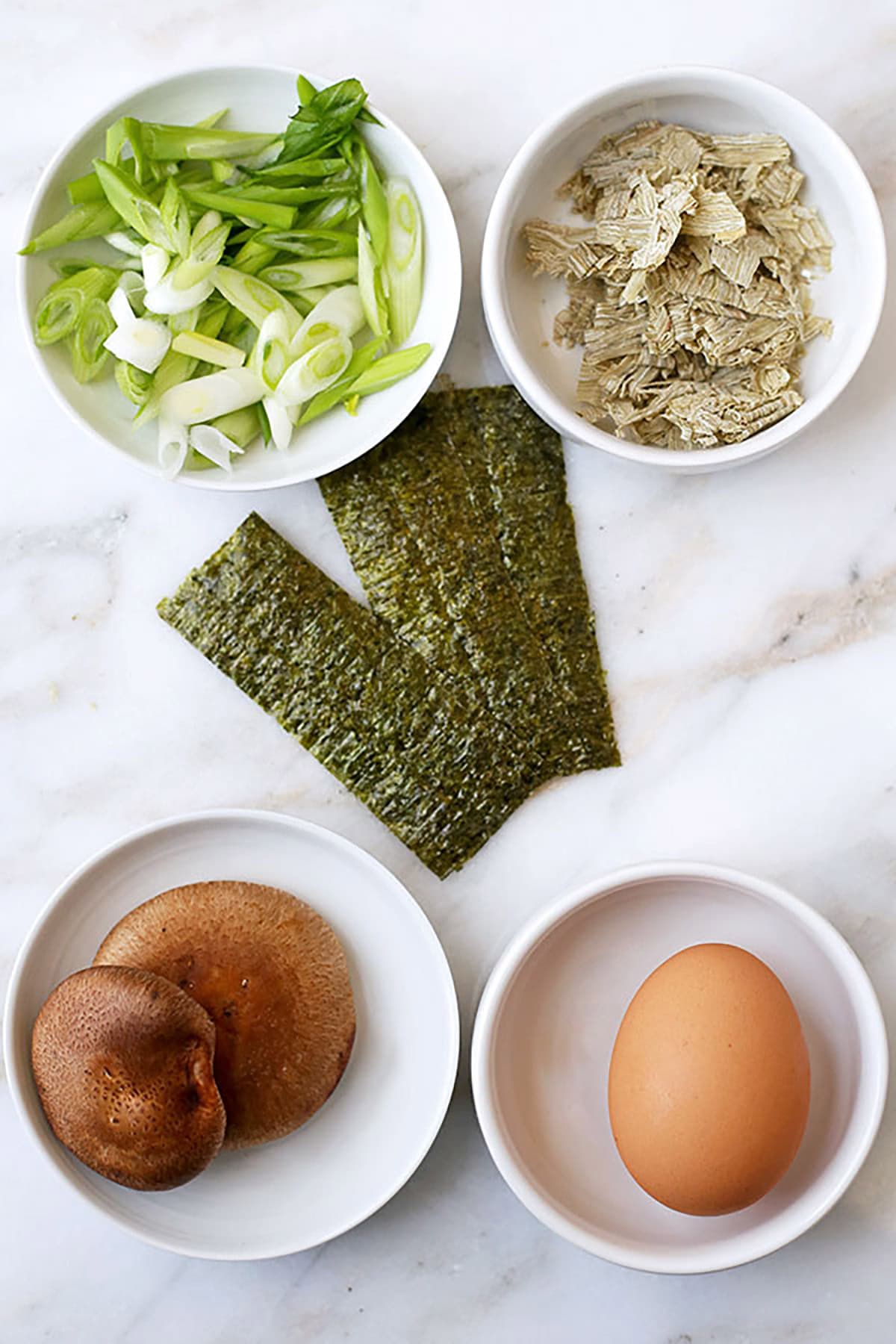
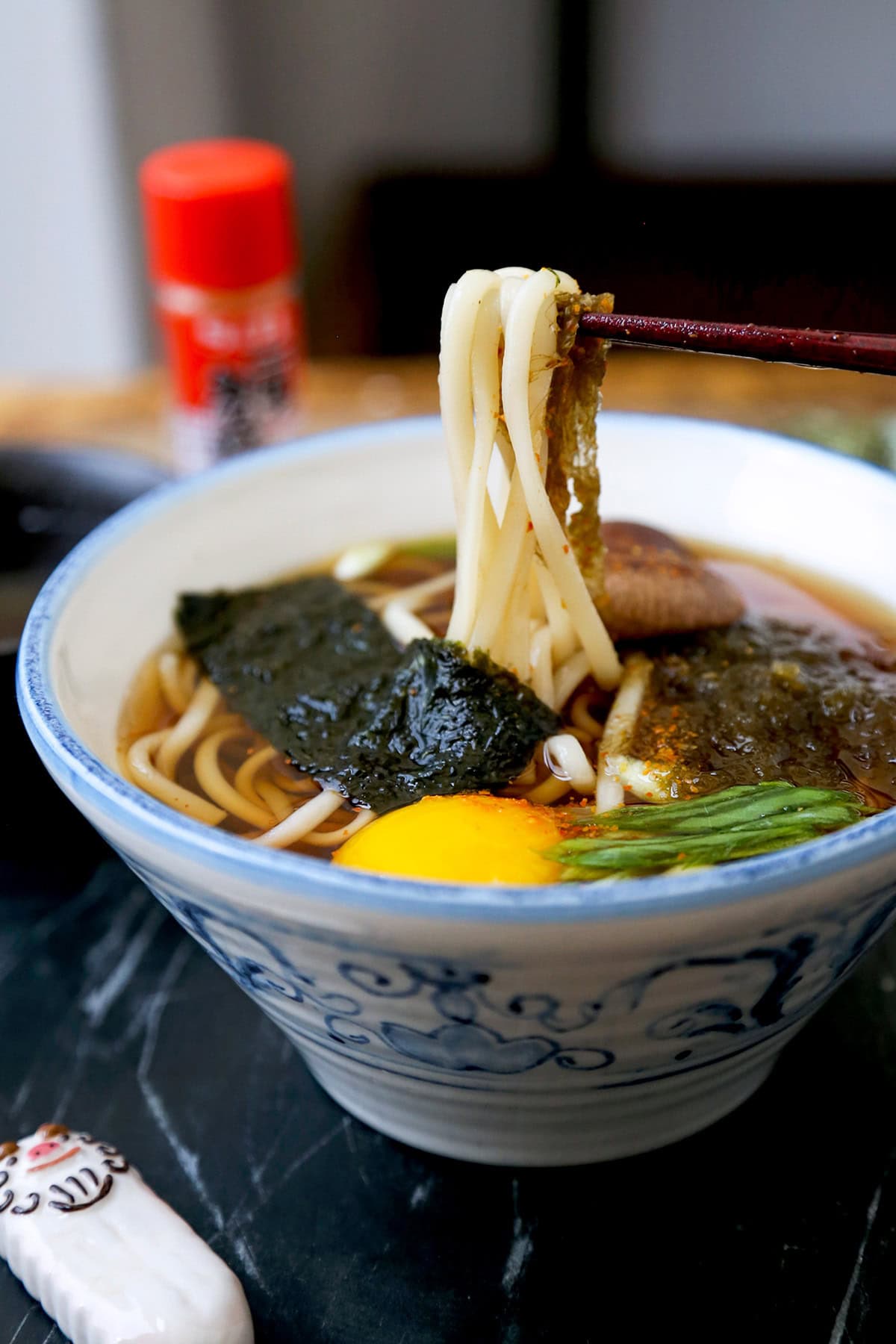
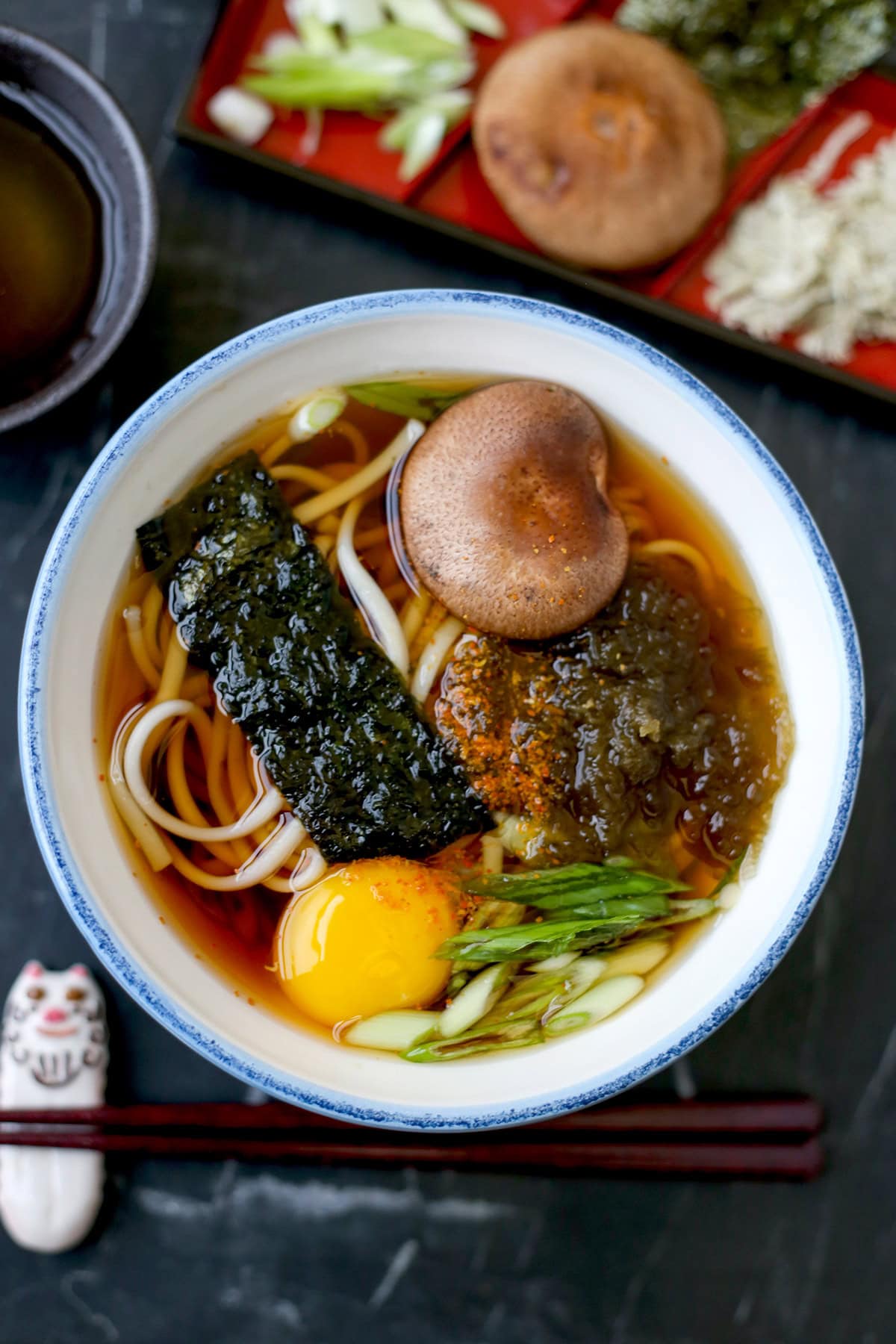
- Toppings: I have chosen chopped scallions, a raw egg, shiitake mushrooms, tororo kombu, and a piece of nori for this recipe’s toppings. But pretty much anything can be used as a topping. Scroll down to see other topping options.
Variations
- Low Sodium: Use ½ tablespoon soy sauce instead of the recommend 1 ½ tablespoon. You can also use a less sodium soy sauce.
- Vegan: You can easily make vegan dashi by using powdered kombu dashi.
To learn more about udon noodles, read my soba vs udon noodle post.
How To Make Udon Noodle Soup
- Gather and prep all of your ingredients.
- Put all the ingredients for the broth in a pot, stir, and let the kombu steep for about 10 minutes.
- Heat the soup until it’s boiling and remove the kombu. Let it simmer for 5 minutes.
- Add the noodles to a pot of boiling water and cook according the instructions on the package. Drain them well.
- Divide the broth and noodles into two bowls and finish with the toppings. Serve.
Cooking Tips
- Chopping the green onions on the bias makes them easier to grab with chopsticks.
- Only add the noodles to the broth right before serving the dish. This prevents them from soaking up too much broth and expanding.
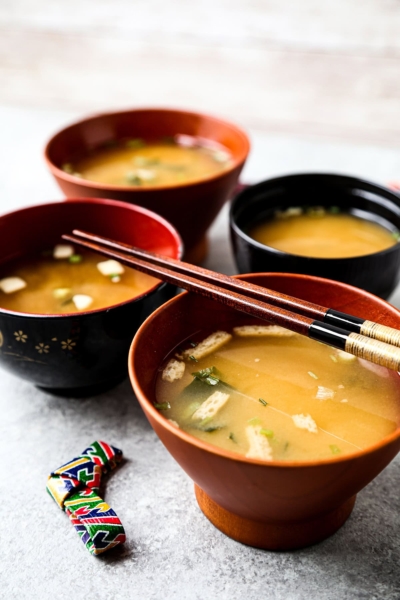
If you enjoy light Japanese soups like this one, you may also like this classic Japanese miso soup, which is just as comforting and easy to make. You may also find my miso paste guide helpful to learn more about one of the most important pantry ingredients in Japanese cooking.
Tips for a Tasty Broth
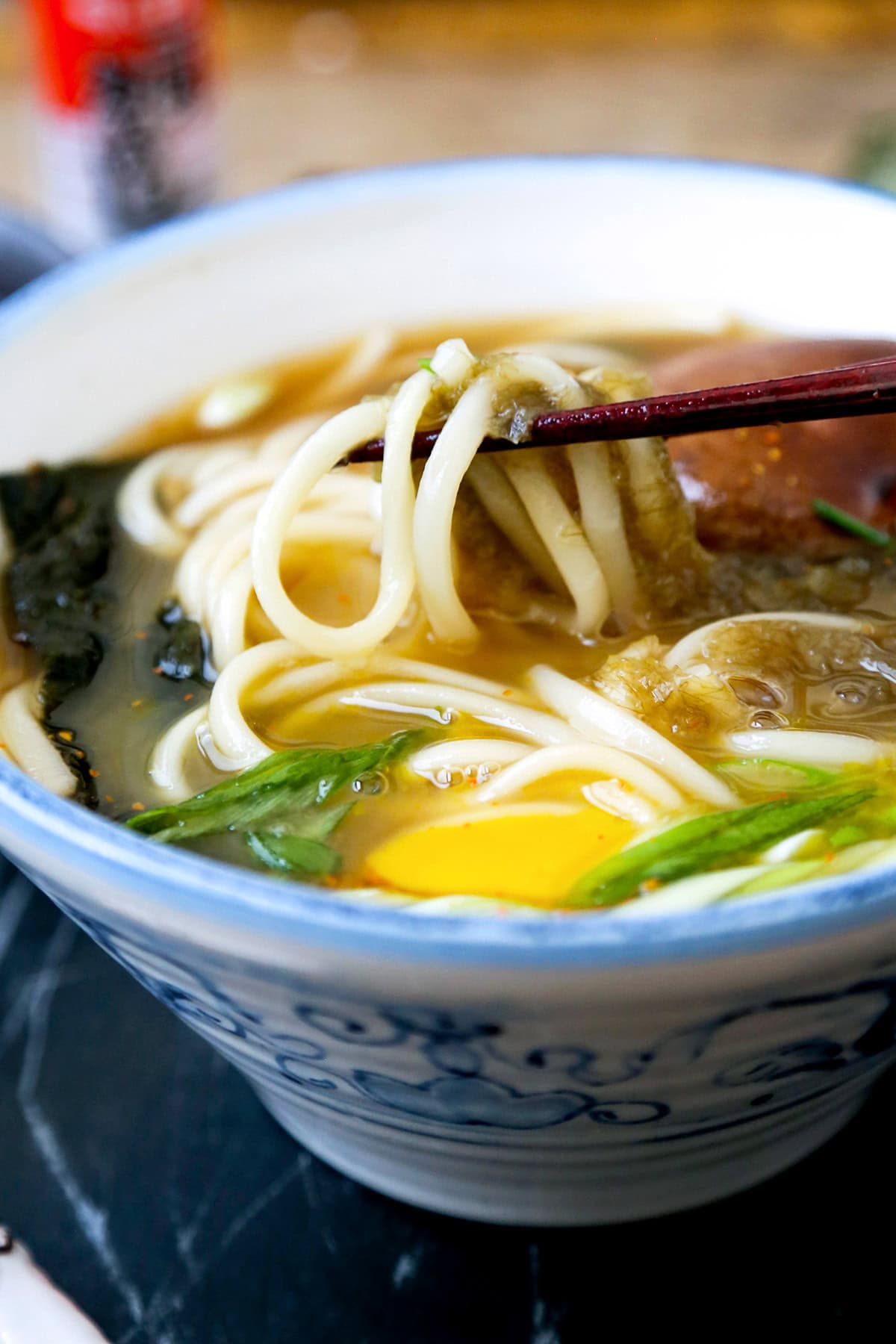
The broth is what makes this soup special. Here’s how to tweak the flavors to achieve the perfect flavor for your palate.
- Start with good-quality dashi for the best umami flavor
- Taste before adding all the soy sauce — different brands vary in saltiness
- Adjust mirin and soy sauce to your preference
- If you prefer a lighter broth, replace part of the dashi with water
- For additional flavors, add some grated ginger or garlic for a punch, or drizzle chili oil or scallion oil.
Choosing the Best Udon Noodles
For the best texture, I recommend using fresh or frozen udon noodles if you can find them. They have a thicker, chewier bite that holds up well in hot broth. My personal favorite are sanuki udon (さぬき), which hail from the Kagawa prefecture in Japan. The noodles are square shaped, thick, and have a chewy texture that’s both firm and soft. They are most often used in bukkake udon.
If you’re using dried udon, be sure to cook them fully and rinse them briefly under warm water before adding them to the soup. This removes excess starch and improves the texture.
Topping Ideas
- Soft boiled egg or soy sauce egg
- Shrimp tempura
- Chopped spinach or bok choy
- Fish cakes or kamaboko (surimi)
- Deep fried tofu pouch (abura-age) like kitsune udon
- Tempura flakes
- Grilled chicken or tofu
- Sesame seeds
Storage
The dish itself cannot be saved as the cooked noodles will get mushy and expand to the point where it will absorb most of the broth.
Make ahead: You can make the broth ahead of time and store it in the freezer of fridge. Save it in an airtight storage container and refrigerate for up to 2 weeks in the fridge, or 2 months in the freezer.
What To Serve With This Soup
Japanese pickled vegetables (tsukemono)Udon soup can be served for lunch or dinner as it is filling enough to be considered a main dish. In Japan, it will be accompanied with small sides such as inari sushi, tempura, pickles (tsukemono), hiyayakko (chilled tofu), or hijiki salad.
Other delicious sides that can be served are:
- Gomae (Japanese spinach salad)
- Kaisou salad (Japanese seaweed salad)
- Agedashi tofu (deep fried tofu with tsuyu broth)
- Nasu dengaku (broiled eggplant with miso glaze)
This soup also pairs well with a simple green salad topped with a carrot ginger dressing.
PrintClassic Udon Soup (かけうどん)
This is a basic udon soup recipe made with chewy noodles, a light and savory broth, and topped with various toppings.
- Prep Time: 5 minutes
- Cook Time: 10 minutes
- Total Time: 15 minutes
- Yield: 2 servings 1x
- Category: Soups
- Method: Boiling
- Cuisine: Japanese
- Diet: Vegetarian
Ingredients
- 8 ounces dry udon noodles or 2 packets of fresh udon noodles
Broth
- 1 cup dashi (click here if for homemade dashi (vegan option also available), or use 1 teaspoon dashi powder mixed with 1 cup water
- 1 cup water
- 1 1/2 tablespoon soy sauce
- 3 tablespoons mirin
- 3-inch piece kombu (dried kelp)
Toppings
- 3 stalks green onions, chopped
- 2 shiitake mushrooms
- 2 eggs
- 2 dry nori sheets
- tororo kombu (optional)
Instructions
- Put all the ingredients for the broth in a pot and leave for 10 minutes. Bring to a boil and remove the kelp. Lower the heat, cover and simmer on low for 5 minutes. If you are using shiitake mushrooms for topping, add them to the broth and simmer together.
- Bring a pot of water to boil and add your udon noodles. Cook noodles according to the directions on the package. Save some of the water (about a cup), drain and set aside.
- Divide the noodles and broth between two bowls and add topping of your choice. Serve hot.
- Add a little of the hot udon water that you saved to dilute the broth if it’s too strong.
Notes
Leftover broth:
- You can refrigerate the broth in an airtight storage container. It will keep for up to 1 month.
- Or you can freeze the broth in an airtight storage container (let it cool to room temperature first) and it will last for up to 3 months.
Nutrition
- Serving Size: 1 bowl
- Calories: 497
- Sugar: 17.4g
- Sodium: 1683.7mg
- Fat: 6.7g
- Saturated Fat: 1.9g
- Unsaturated Fat: 1.2g
- Trans Fat: 0g
- Carbohydrates: 85.8g
- Fiber: 1.5g
- Protein: 13.3g
- Cholesterol: 192.8mg
Frequently Asked Questions
No it’s not. There is soy sauce sauce in the broth and the noodles are made of wheat flour, which contains gluten.
While both noodles are made with wheat flour – contrary to the belief that ramen noodles are the same as egg noodles (they usually do not contain any eggs), udon noodles are usually thicker and chewier. Also, while udon is most often served with a traditional tsuyu, soy sauce, or dashi based broth, ramen can be served with richer broths such as tonkotsu (milky pork based broth).
Udon soup is relatively healthy since it’s low in fat and calories. But the downside is it can be high in sodium. If you are watching your sodium intake, make sure to use a low sodium soy sauce when making the soup.








Questions and Reviews
I love,love your recipes.Somehow I lost the recipes you where mentionnig that now you leave in Japan (lucky Women)…….I do not know if it was the one of the 10 or 11 nov. But I would love to have it.Of course if you can. Thank you in advance,an old fan.
This broth tasted authentic. Such a simple and yet flavorful recipe. Thank you!
I have been wanting to try more Japanese cuisine type dishes and stumbled up this recipe/ website and I just made the udon noodles the Japanese fried rice and miso soup and all the recipes especially this one was terrific it tastes exactly like the Japanese’s restaurants i go to. Thank you!
Thank you Genevieve! It’s one of my favorite lunches to make 🙂
This has become a favourite in my house! My two daughters (ages 11 and 14) both love to cook, and make this recipe at least once or twice a month!! They aren’t into the raw egg though, so they make soft boiled eggs instead.
Hi !
I’m new to Japanese cuisine and you totally sold me on this recipe!
I’m going to try it out tomorrow but was wondering do you cook the egg?
Thanks! Love your website
Hi Danica, I don’t cook the egg because the slimy texture doesn’t bother me. However my husband prefers a poached egg which is very easy to make with and egg cooker 🙂
What are tempura bits?
Hi Janyne, tempura bits are fried bits of dough sold in small packages. You can see an example here: https://www.amazon.com/Yamahide-Tempura-Bits-50g-packs/dp/B01FTG1CTW They are crunchy and are served as toppings to sushi, in soups, etc..