Sweet red bean paste, called anko in Japanese, is one of those ingredients you’ll find everywhere in Japan — tucked inside soft mochi, sandwiched between fluffy pancakes, or baked into golden buns. It’s simple at its core but the flavor is surprisingly rich, earthy, and gently sweet.
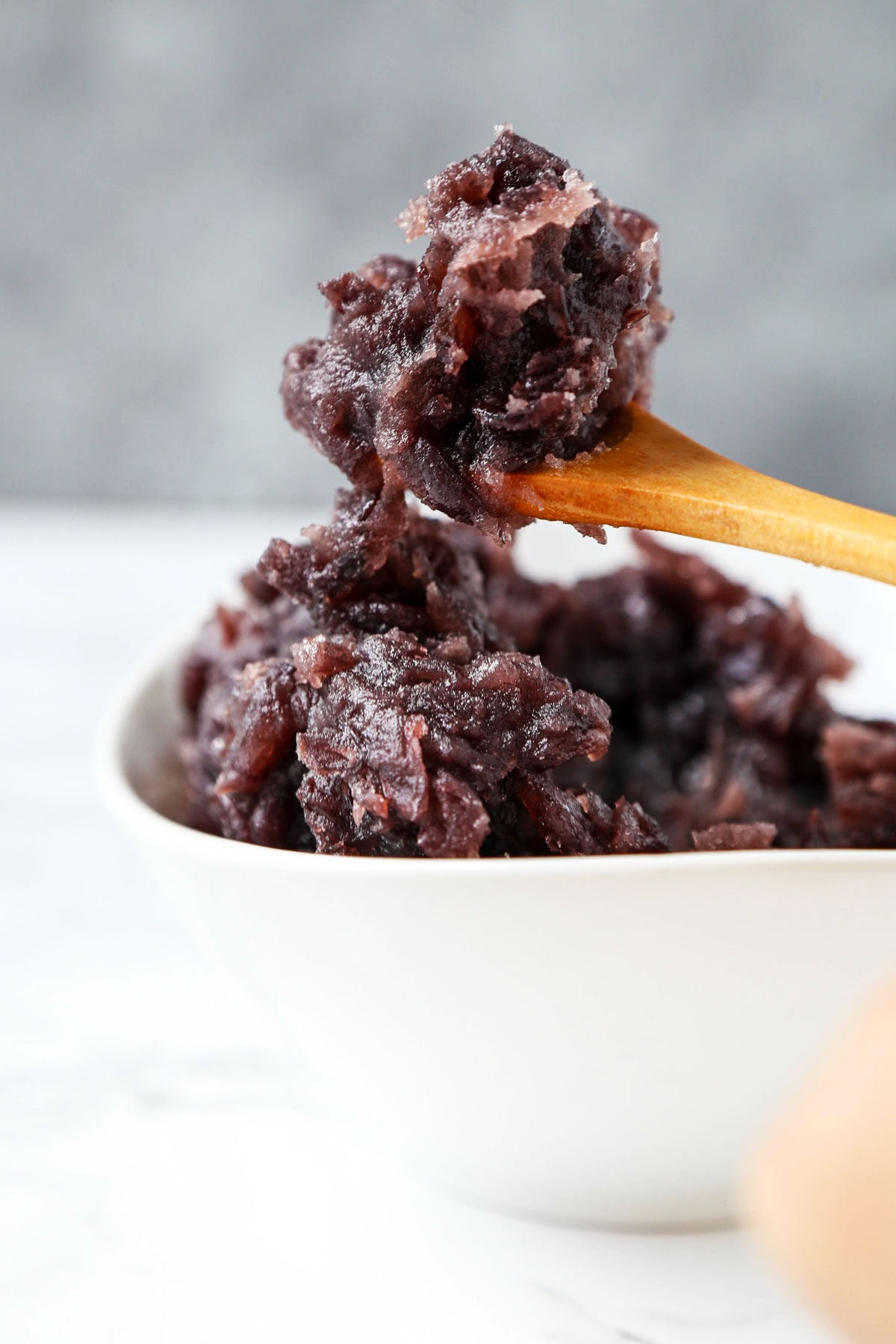
Sweet red bean paste is one of the most iconic ingredients in traditional and modern Japanese desserts. It’s the mashed purple bean found in sweets such as manju, taiyaki, and shaved ice (kakigori). If you’ve ever wondered how Japanese sweets get their signature flavor, chances are, anko is the answer.
While it’s easy to find canned versions at Asian grocery stores, making anko at home gives you complete control over the sweetness and texture. In this post, I’ll show you how to make authentic anko at home, the difference between smooth and chunky versions, and a few easy ways to use it.
Table of contents
What Is Red Bean Paste?
Anko is a traditional Japanese sweet made by simmering azuki beans with sugar until they become soft, thick, and slightly creamy. It’s one of the most common ingredients used in wagashi (Japanese sweets), and you’ll find it in everything from pastries to chilled desserts.
Compared to Western desserts, anko is much less sweet and has a deeper, almost nutty flavor.
Anko vs Other Sweet Spreads
- Less sweet than jam
- More earthy than chocolate
- Because it’s made from beans, it’s high in protein and quite filling
- Naturally plant-based
Red Bean Paste Ingredients
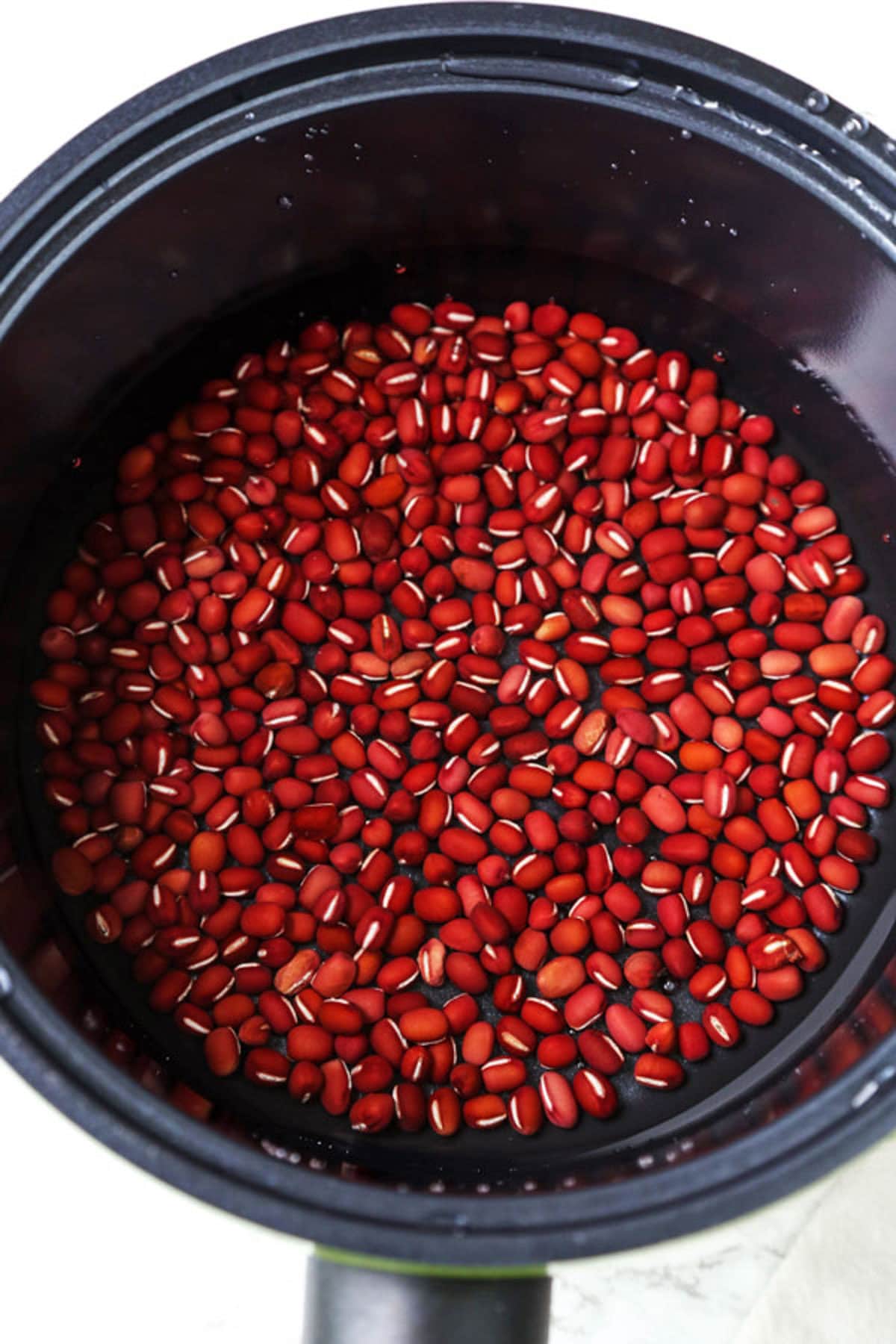
- Adzuki beans: Small red beans with a naturally sweet, earthy flavor and nutty flavor. The quality of the beans matters, so try to use fresh, high-quality dried azuki beans whenever possible.
- Sugar: The sugar balances the earthiness of the beans and creates the classic anko taste.
- Water: 4 cups to boil the sugar and adzuki beans.
- Salt: Just a pinch to enhance the sweetness and nuttiness of the paste.
Types of Red Bean Paste
There are many different types of red bean paste available but the most popular ones in Japan are:
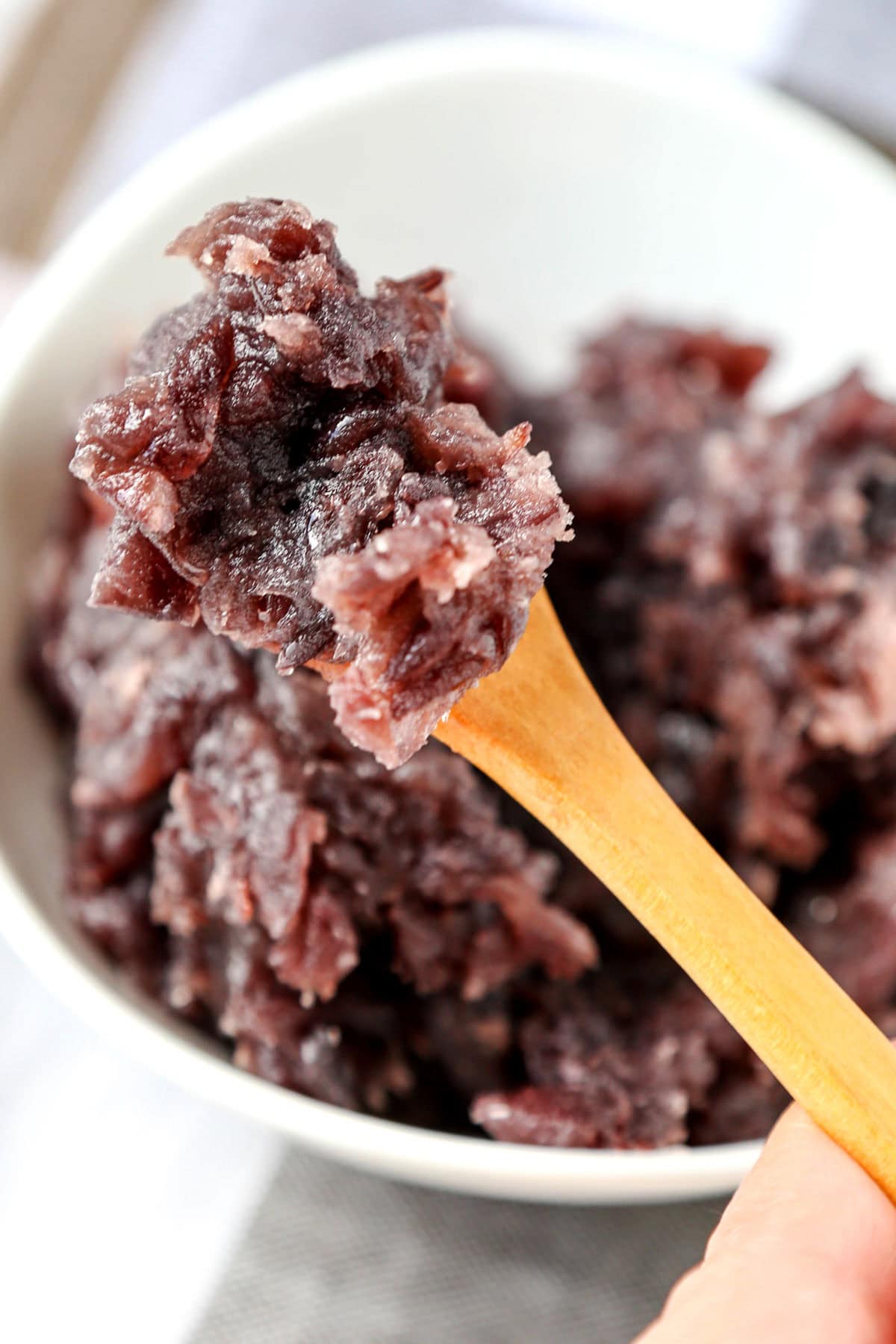
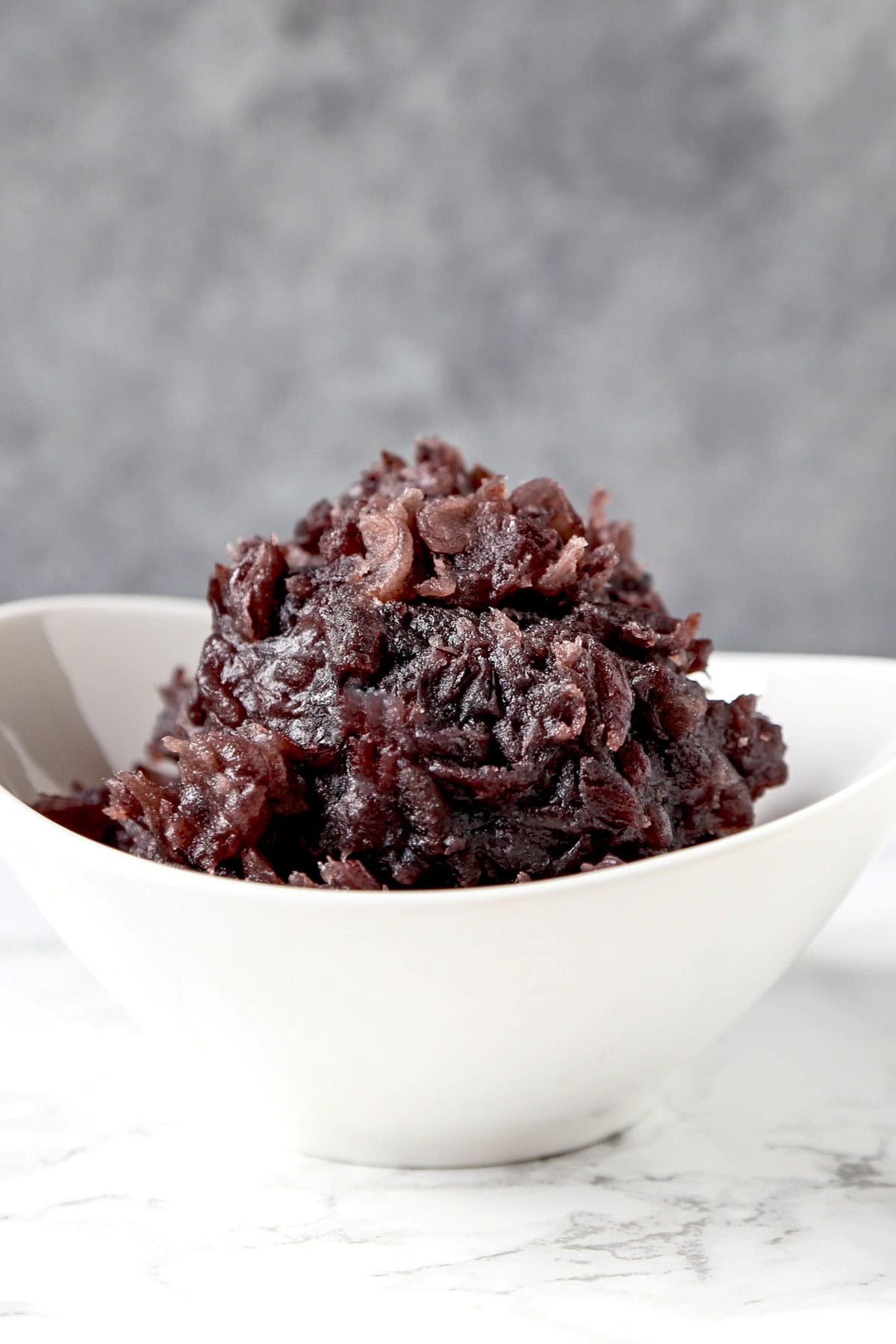
- Tsubuan (chunky red bean paste): Contains whole or partially mashed beans which gives it a thicker and more rustic texture. This recipe makes tsubuan.
- Koshian (smooth red bean paste): The beans are fully mashed and strained to create a silky and uniform texture. This type is often used in refined desserts.
- Tsubushian (lightly mashed): Boiled adzuki beans that have been mashed with the skin on.
- Sarashian (dehydrated) – dehydrated adzuki bean powder that is reconstituted with water.
- Ogura-an (mixed) – a mixture of koshian and tsubuan paste.
How To Make Red Bean Paste
For this anko recipe, I’m using the tsubushian technique of boiling the beans and mashing them with the skin on. The texture isn’t as smooth as mashing them through a sieve but it’s just as delicious and pleasant to the palate.
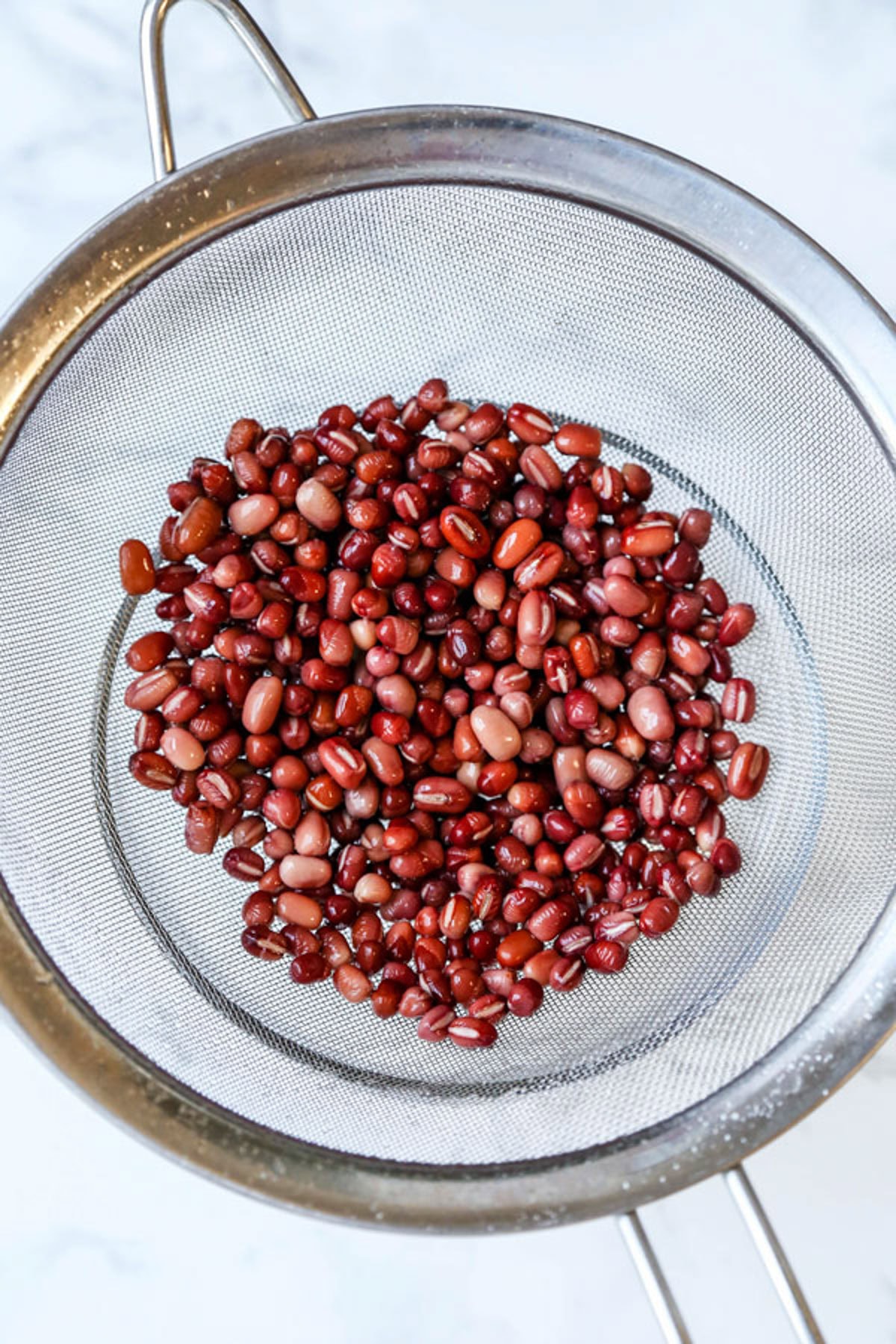
- Soak the beans. I recommend doing it overnight or for 6-8 hours.
- Rinse and drain the adzuki beans. Then transfer them to a pot along with 4 cups of water.
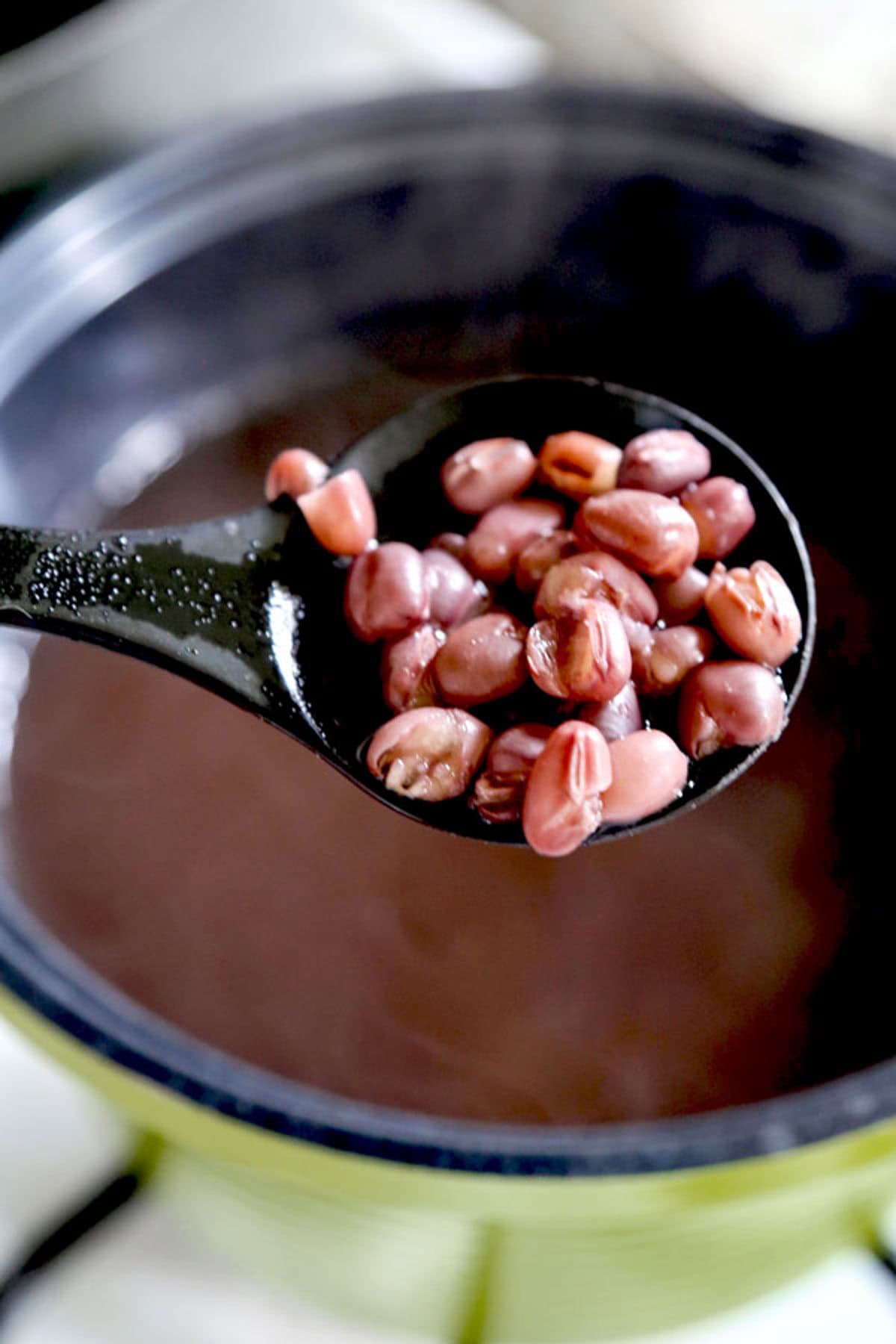
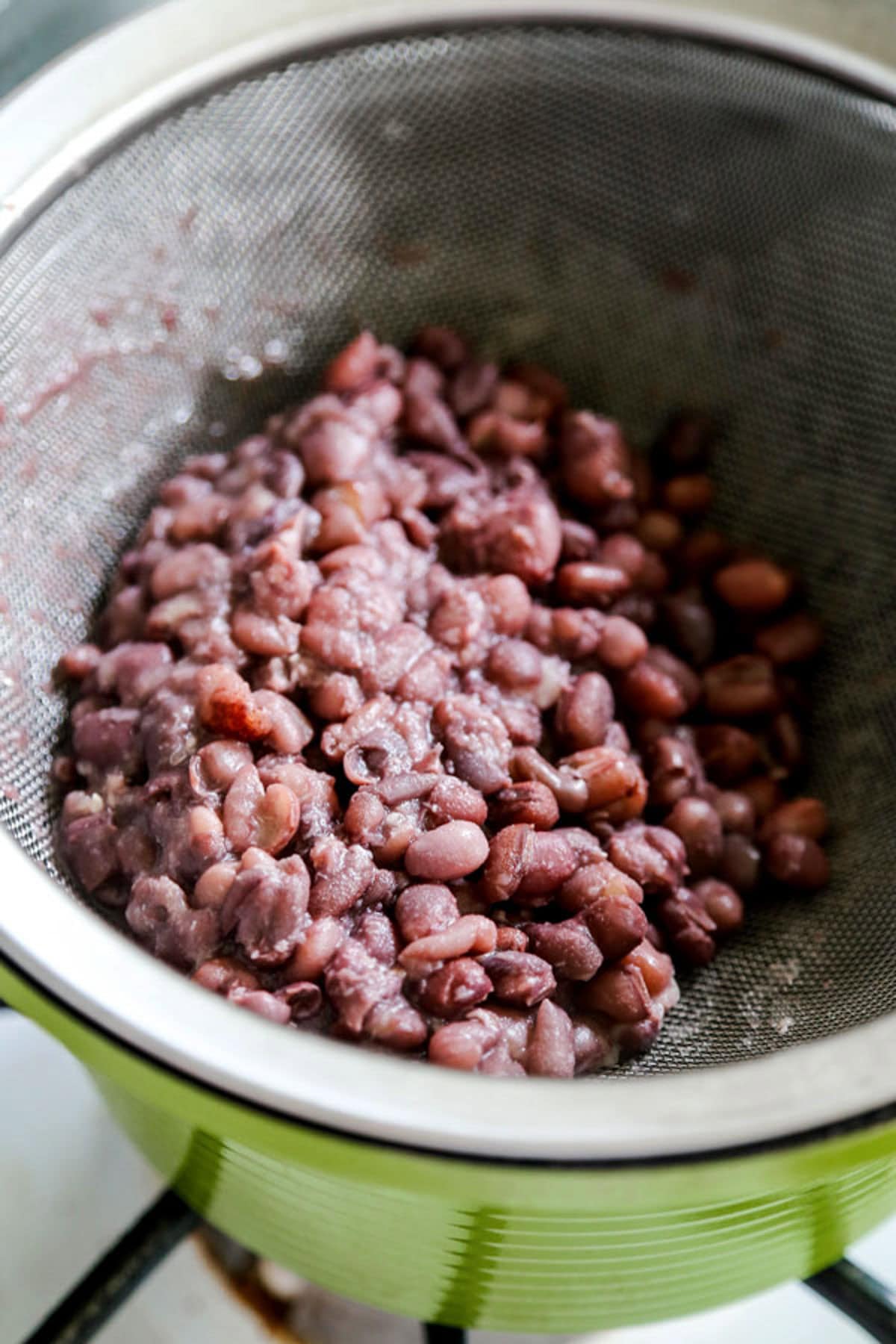
- Simmer the beans. It will take approximately 1 hour for the beans to get soft.
- Add the sugar and salt. Keep stirring as you add the sugar and salt until a paste begins to form.
- Place anko in a bow and let cool. Serve and enjoy!
Cooking Tips For Best Results
- Simmer, don’t boil. Cooking adzuki beans too aggressively leads to broken skins.
- Don’t rush the simmering. This is where flavor develops. Low, steady heat and patience are key to making a successful red bean paste.
- Stir often. Especially toward the end to prevent sticking and burning.
- Add the sugar in the end.
Storage
Fridge. Store red bean paste in an airtight storage container and refrigerate for 7-10 days.
Red bean paste can also be frozen! Simply place the paste in an airtight storage bag or container – once the mixture has cooled down to room temperature – and freeze for up to 6 weeks.
How To Use Red Bean Paste
There are several ways to enjoy red bean paste:
- Spread it on toast with butter for a simple breakfast (ogura toast)
- As a topping for green tea flavored shaved ice or matcha ice cream, topped with anmitsu and dango (rice dumplings)
- Add a spoonful to desserts for a naturally sweet topping
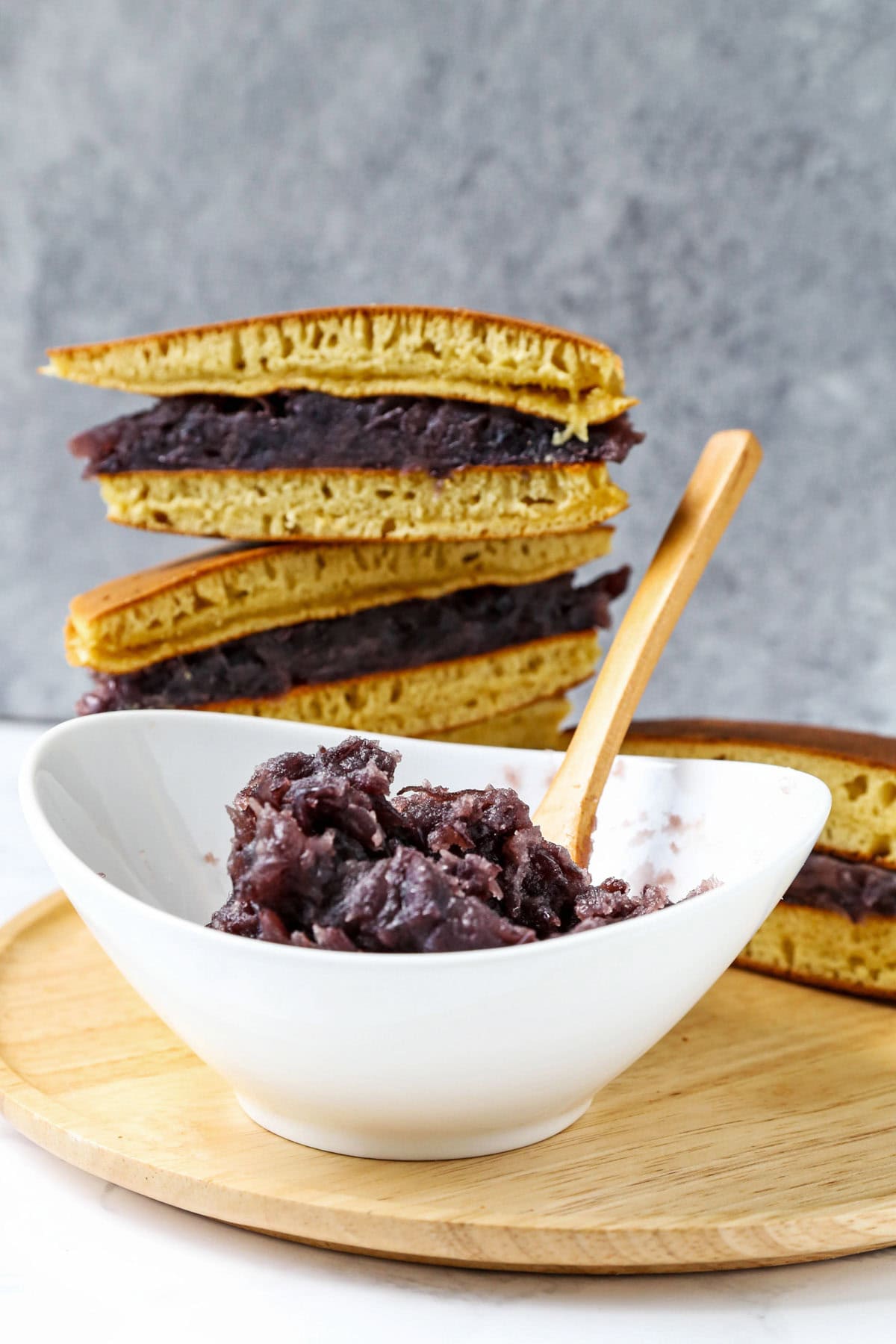
- Use it as a filling for pastries or pancakes such as manju, daifuku, dorayaki and taiyaki
- Pair it with fruit like strawberries or bananas
- In yokan (red bean jelly) and green tea popsicles
- In zenzai which is a traditional Japanese dessert soup
Other yummy Japanese desserts you might like to try: Japanese cheesecake, coffee jelly, castella cake, matcha mochi cookies, mitarashi dango.
Did you like this recipe? Are there changes you made that you would like to share? Share your tips and recommendations in the comments section below!
PrintSweet Red Bean Paste (Anko) – 餡子
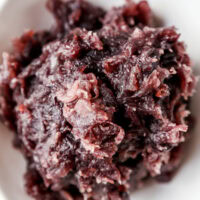
A traditional Japanese sweet red bean paste made with azuki beans.
- Prep Time: 5 minute
- Cook Time: 1 hour 10 minutes
- Total Time: 1 hour 15 minutes
- Yield: about 1 cup 1x
- Category: Dessert
- Method: Boiling
- Cuisine: Japanese
Ingredients
- 1/2 cup (about 105 grams) adzuki beans
- 4 cups water
- 2/3 cup granulated sugar
- 1/8 teaspoon kosher salt (optional)
Instructions
- Soak the beans. Soak azuki beans for 6-8 hours or overnight. Rinse under cold water and drain.
- Boil them. Add the beans to a pot along with 4 cups of water and bring to a boil. Lower heat to a simmer, cover and cook for 1 hour or until beans are soft enough that you can easily squash them between your fingers.
- Drain them. Drain well and return beans to the pot.
- Season them. Add sugar and salt and turn the heat on to medium high. Stir constantly for 7-10 minutes and occasionally mash the beans against the side of the pot until the mixture turns into a paste.
- Serve. Turn the heat off and transfer the paste into a bowl. Cool to room temperature before using. Serve with ice cream, use a topping for pancakes, as a filling for dorayaki or taiyaki, etc…
Notes
Storage: Transfer the anko in a storage container and refrigerate for up t0 10 days. Or, freeze adzuki bean in an airtight storage bag or container for up to 6 weeks.
Nutrition
- Serving Size: 1/4 cup
- Calories: 215
- Sugar: 33g
- Sodium: 74mg
- Fat: 0.1g
- Saturated Fat: 0.1g
- Unsaturated Fat: 0g
- Trans Fat: 0g
- Carbohydrates: 49.9g
- Fiber: 3.3g
- Protein: 5.2g
- Cholesterol: 0mg
Frequently Asked Questions
Anko has a mild sweetness with an earthy, slightly nutty flavor. If you’ve never had it before, it’s closer to a lightly sweetened chestnut or sweet potato than anything overly sugary.
No. Adzuki beans are about half the size of kidney beans. They are higher in calories than kidney beans, but also contain more protein and fiber. Adzuki beans originate from China whereas kidney beans are native to Central America and Mexico.
The color will get darker and the smell will be less sweet, more earthy, and pungent.
No you can’t. Other beans won’t produce the same flavor or texture as adzuki beans.
It’s relatively low in fat and made from simple ingredients, but still contains sugar — best enjoyed in moderation.








Really try not to use any sugar. How about using stevia for sweetening?
I also see fermenting this paste for long term use. Have you tried this?
Hi Tanya! I have never tried making this dish with stevia so I’m not sure how it would turn out. But I have made it using less sugar and it was still tasty 🙂 As for fermenting, I don’t think it would taste good since the taste of anko is mild and sweet (not fermented flavor). But if you do try to do it, please let me know how it turns out! 🙂
Hi Caroline! Thank you so much for your recipe.
I want to make a batch in advance, can I keep it in a sterilize sealed jar in my pantry for some time? And then once I opened it, in the fridge?
Thank you so much
Hi Iliana! yes you can but I would keep it in the fridge the entire time just in case 🙂
Great recipe! I cooked the beans in my instant pot to reduce prep time and used 1/3 cup of sugar which was the right amount of sweetness for me.
While this is a very easy recipe, I also have seen red bean paste in cans, which is even easier. Do you think the taste of home-made paste is markedly better? My son loves red bean confections, but even so,I can’t see myself using a whole lot of it.
Hi Alice, I wouldn’t say it’s better, but the advantage of making it at home is you get to control the level of sweetness in the anko. I find anko to be too sweet at times so I enjoy making it at home 🙂
Hi, can I use kidney beans instead? Is it very different this way? And thanks for your good recipe
Hi Setare! I wouldn’t recommend using kidney beans as adzuki beans have a different texture and slightly different taste. You should be able to find adzuki beans at a natural food store or Whole Foods, or you can order them on Amazon 🙂
Hello!
I just made anko and it the color isn’t as pretty as yours! It’s a very pale color and although it tastes good, it doesn’t look very appealing. Is there a way to fix this? Thank You!
Hi Joha! The color of the anko should be a rich brownish red color, but if the taste is good my guess is that you didn’t anything wrong, it was probably the color of the beans that caused the color to be pale. There are pale white beans called shiro-ingen-mame that are also used to make white anko so don’t worry too much about the color, as long as it tastes good, enjoy! 🙂
Do you eat this by itself or what can you eat this with? Thank you 🙂
Hi Mary, anko is best when used as a topping for desserts (over ice cream, spread on cookies or pancakes). Also, here’s a recipe I have for a traditional Japanese dessert called dorayaki https://pickledplum.com/recipe/dorayaki-red-bean-paste-pancakes/
I know it’s Caroline NOT … UGH I really dislike autocorrect sometimes. Sorry!
Love the family pic Catoline! Brain Freeze? LOL
Haha yes! Let’s just say I had a major sweet tooth as a kid, especially when it came to ice treats!